3 months ago by Wynn Staff
3 months ago by Wynn Staff
Frank Sinatra may have been Hoboken's favorite son and Hollywood royalty. He famously sang about Chicago and New York—but in many ways, he belonged to Las Vegas.
By Nina Fedrizzi for Wynn Magazine
Spend enough time in the company of Las Vegans of a certain age, and you will almost certainly hear a Frank Sinatra story or two. They're usually told in reverent tones, a memory passed down like a cherished family heirloom.
Today, the list of those who truly knew Sinatra during the Rat Pack's golden age in the 1960s—first at the Desert Inn, on the site where Wynn Las Vegas stands today, then holding court in the Sands' Copa Room and the Golden Nugget—is dwindling rapidly. But if you listen carefully, you can still hear the stories.
There are tales of the palms he casually greased during late nights at the gaming tables, a drink and a cigarette in hand. Or stories of his extravagant generosity, such as the time he bumped into a newly married friend of a friend at the Sands and, with the snap of his fingers, arranged a honeymoon suite, dinner, and a front-row table for that evening's show.
Then there are the classic Sinatra stories, like the one involving Lloyd George. Now a federal judge, George was working as a lifeguard at the Sands in 1953 when he was asked to bring Sinatra and his entourage "four chairs and a screwdriver." George found the chairs but panicked when he couldn't locate the tool. Sheepishly returning empty-handed, he was informed that Sinatra wanted four beers and a screwdriver—the vodka-and-orange-juice kind. Some lessons are learned the hard way.
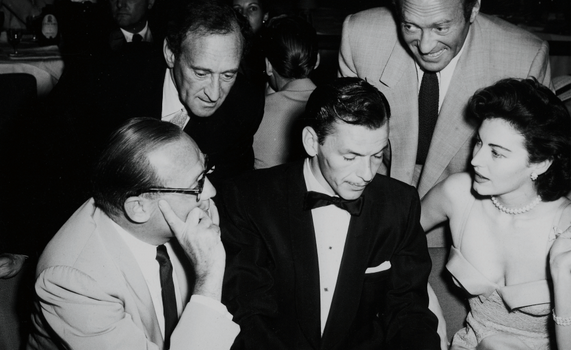
Sinatra held court everywhere from the Desert Inn to the Golden Nugget.
In the early 1940s, the skinny kid from Hoboken and Tommy Dorsey's band played sold-out shows for swooning bobby-soxers at New York's Paramount Theatre. A decade later, when the 35-year-old Sinatra stepped onto the stage of the Desert Inn's 450-seat Painted Desert Room in September 1951, his career had cooled, and his finances were dwindling.
"For six bucks, you got a filet mignon dinner and me," Sinatra later recalled during a 1992 interview.
His early engagements weren't easy. Battling what he called "Vegas throat," Sinatra often performed for half-filled rooms occupied by cattle ranchers and oilmen in cowboy boots and bolo ties.
That wouldn't last long.
"He brought the suits to town," says Lorraine Hunt-Bono, former lieutenant governor of Nevada, whose family owned Las Vegas restaurants and who grew up attending Sinatra's performances at the Sands.
As a young girl, Hunt-Bono remembers seeing Sinatra and his friends walk onstage not in cowboy boots but in gleaming patent leather shoes.
"They had these gorgeous tuxedos with the white stiff collars and the cuff links," she recalls. "When they walked out, I was like, 'Where did these guys come from?' Oh, I fell in love."
By 1954, Sinatra had won an Academy Award for From Here to Eternity, launched his celebrated partnership with arranger Nelson Riddle, and returned to Las Vegas a conquering star.
That same year, he purchased a 2 percent stake in the Sands Hotel, where he became a fixture for nearly 15 years, cultivating the image that would forever define both Sinatra and Las Vegas.
"The Copa Room held about 600 people, which today seems tiny," says Michael Green, associate professor of history at the University of Nevada, Las Vegas, "but it also meant that it was an intimate setting, which certainly was conducive to Sinatra's rediscovery as a balladeer."
The second incarnation of the Rat Pack—Sinatra, Dean Martin, Sammy Davis Jr., Peter Lawford, and Joey Bishop—would forever reshape Las Vegas entertainment.
Inspired by the spontaneous atmosphere of casino lounge shows, the group sprayed seltzer, cracked jokes, welcomed celebrity audience members into the act, and embraced improvisation in ways audiences had never experienced before.
As a teenager, Hunt-Bono often watched the mayhem unfold backstage.
"Mr. Sinatra knew that I was a music major and that I loved to sing," she remembers. "He'd go, 'Okay, honey, where are you going to sit tonight? You can either sit by the horns.'"
Part of the excitement came from never knowing who might appear. One famous Sands marquee advertised Dean Martin as the headliner, followed by the words: "Maybe Frank—Maybe Sammy."
Hunt-Bono vividly remembers Sammy Davis Jr. interrupting Sinatra's performance while dressed head to toe in a white janitor's uniform.
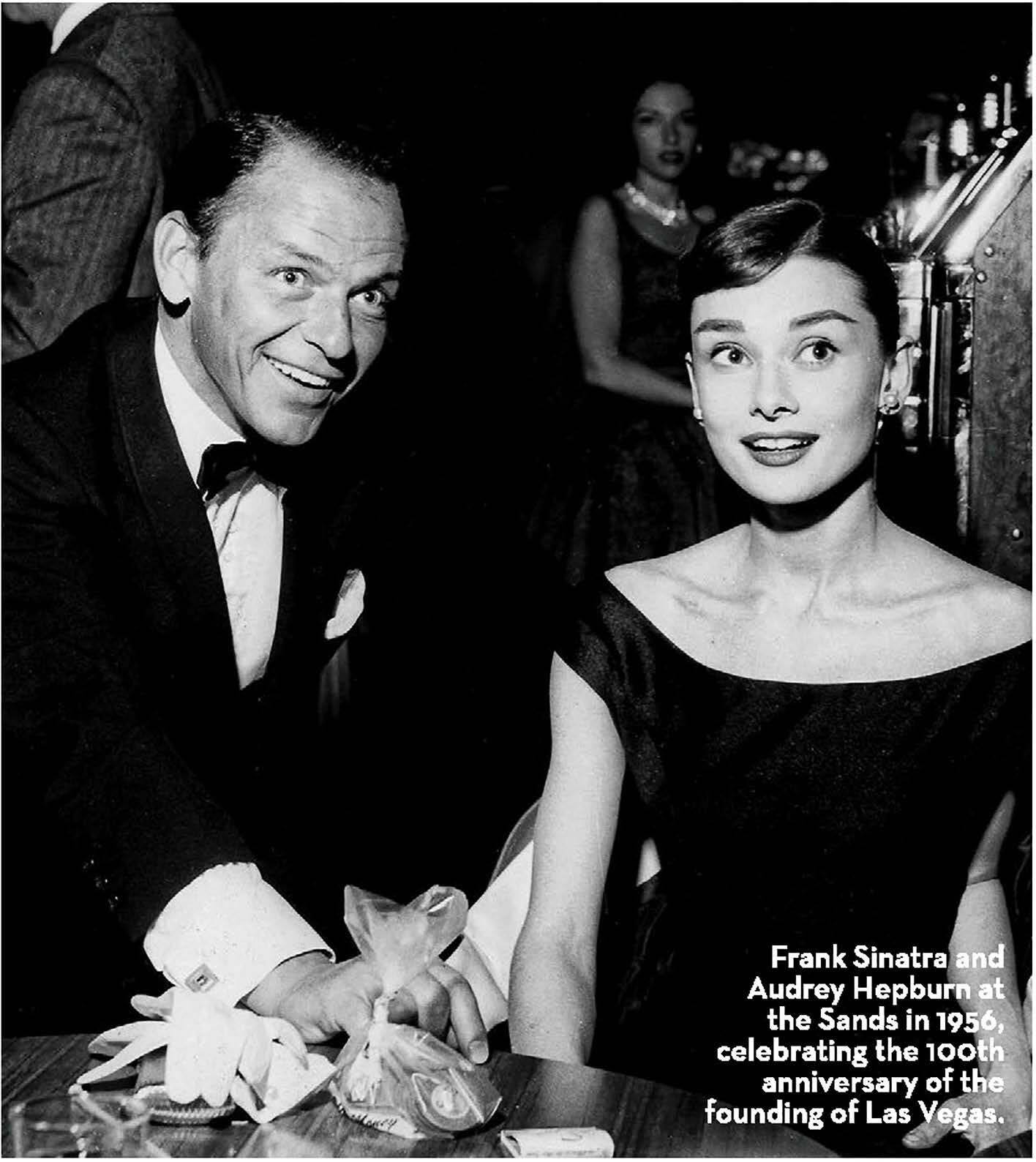
"The audience is looking from the side," she recalls, "and they see it's Sammy's face ... Frank's going, 'What the heck is this?'"
In 1960, Hollywood descended upon Las Vegas during the production of Ocean's 11. Bob Hope, Lucille Ball, and future President John F. Kennedy were among those attending the Rat Pack's legendary performances during what became known as the Summit at the Sands.
According to Green, the resulting publicity transformed both the Rat Pack and Las Vegas.
But the nonstop performances, filming schedule, and late-night celebrations often blurred together.
After two nightly performances in the Copa Room, the group frequently continued entertaining guests into the early morning before reporting to movie sets after only a few hours of sleep.
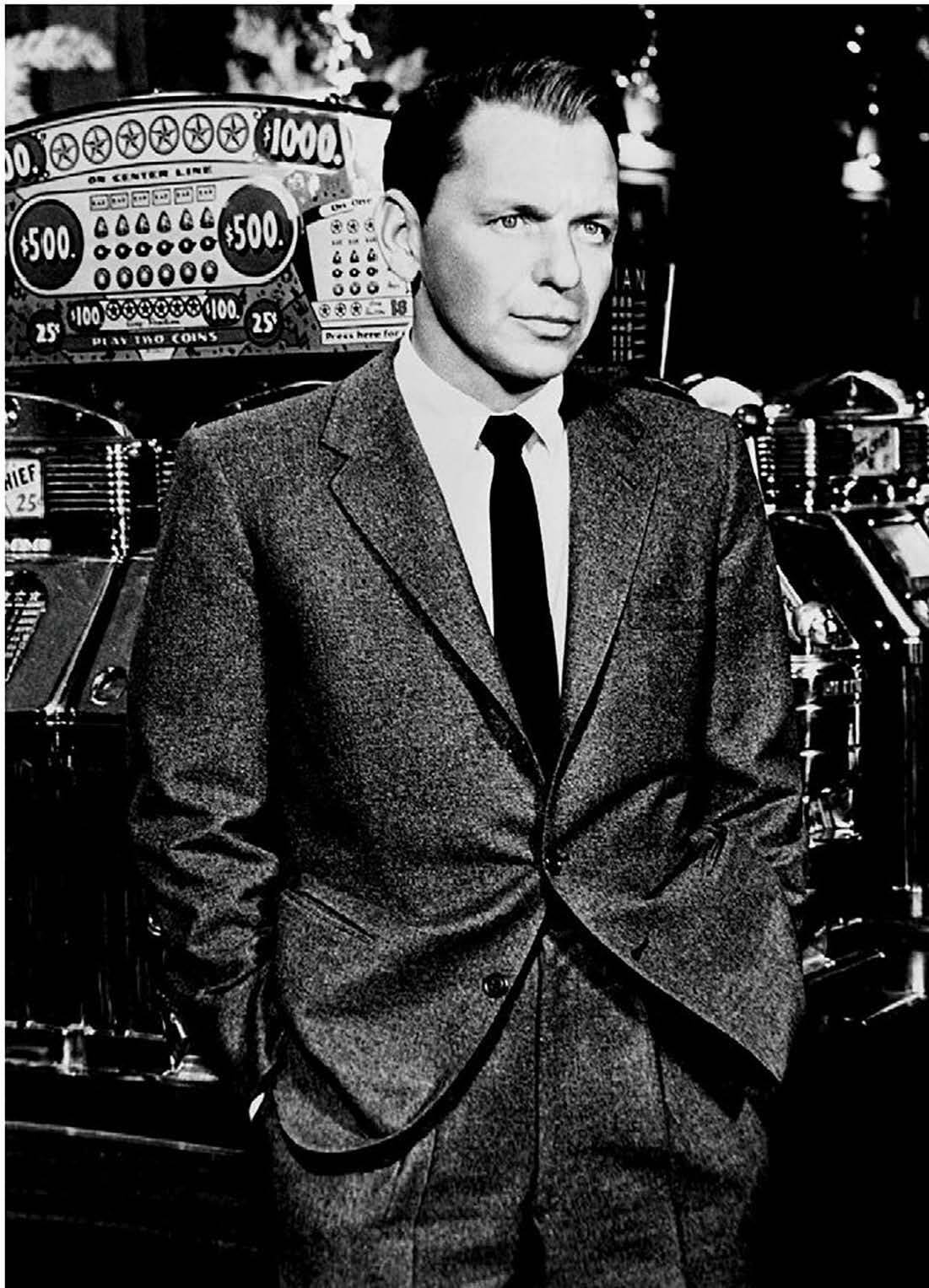
Frank Sinatra Las Vegas, circa 1954.
"This was an era when people smoked and drank, sometimes to excess," Green says. "Frank represented that—doing the things that a supposedly full-blooded American male did. He became a symbol of an idealized Las Vegas. And Vegas gave him a degree of freedom he was unlikely to find elsewhere."
Sinatra continued performing in Las Vegas throughout his life, but his influence extends far beyond the stage.
Today, Wynn Las Vegas honors that legacy through Sinatra, the resort's award-winning Italian restaurant overlooking the Lake of Dreams. Inspired by Ol' Blue Eyes' timeless style, music, and enduring connection to Las Vegas, the restaurant celebrates one of the city's greatest entertainers while paying tribute to an era that helped define the Strip.
Roy Saunders, now general manager of Andrea's at Encore, recalls traveling with Steve Wynn and Sinatra aboard Wynn's private aircraft during his years overseeing in-flight services.
One memorable trip sent Saunders to Paris to retrieve Sinatra for a flight home. After 13 hours in the air, he arrived only to discover Sinatra had departed five hours earlier on another aircraft.
"There wasn't room for his luggage," Saunders recalls with a laugh. "So I flew all 12 of his suitcases home to Palm Springs."
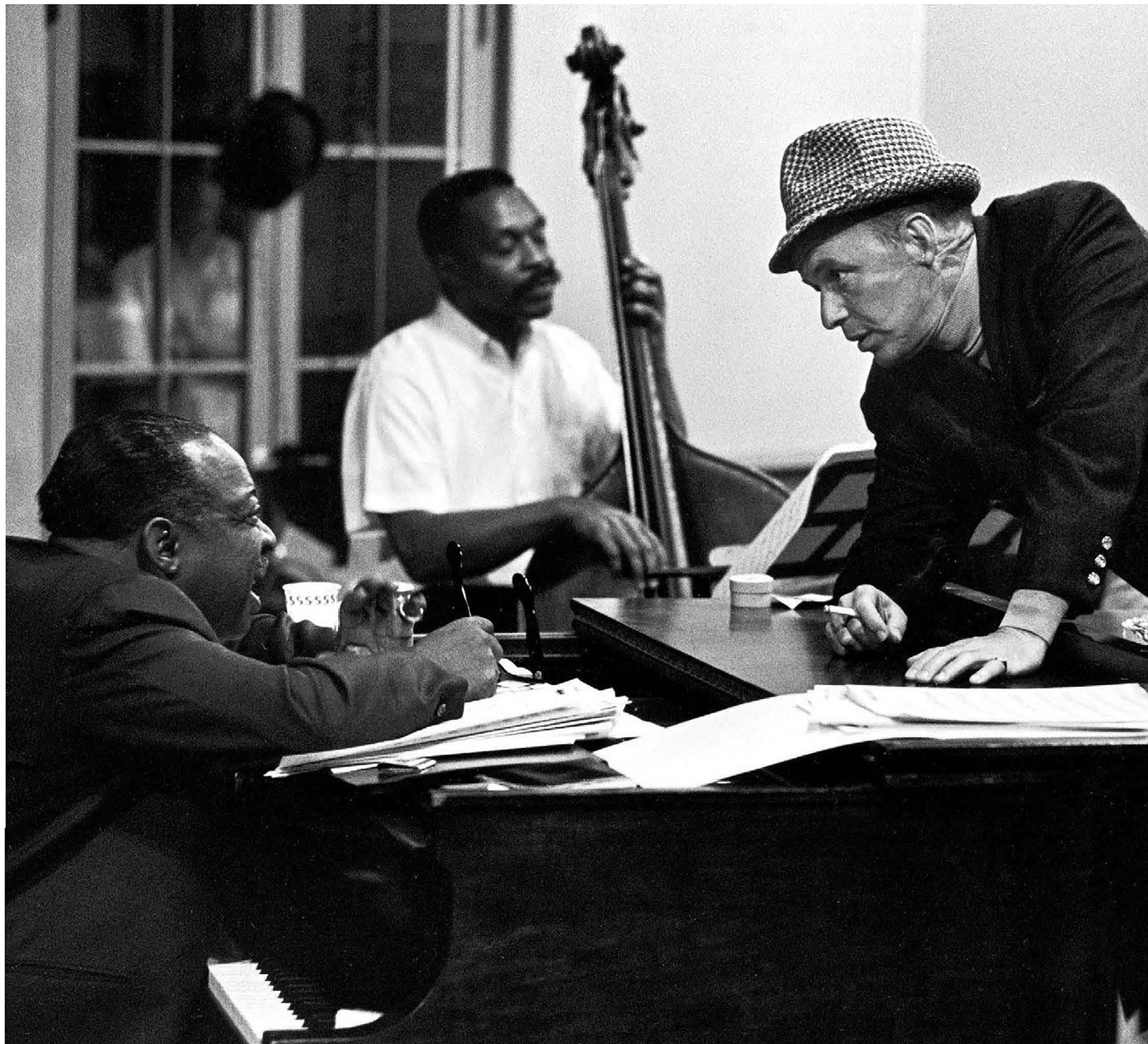
Two legends rehearse: Count Basie and Frank Sinatra circa 1962.
Sinatra performed in Las Vegas on and off until the end of his life.
But the Las Vegas of the 1950s and 1960s represented something unique.
"It was a different time," Green says. "It was a different town. And in a lot of ways, it was Frank's town."
RESERVE YOUR TABLE AT SINATRA TODAY
Why is Frank Sinatra associated with Las Vegas?
Frank Sinatra became one of the defining entertainers of Las Vegas through his performances at the Desert Inn and Sands Hotel, helping establish the city's reputation as the Entertainment Capital of the World.
Did Frank Sinatra perform at the Desert Inn?
Yes. Sinatra made his first Las Vegas appearance at the Desert Inn in 1951, on the site where Wynn Las Vegas stands today.
What was the Rat Pack?
The Rat Pack was an iconic group of entertainers consisting of Frank Sinatra, Dean Martin, Sammy Davis Jr., Peter Lawford, and Joey Bishop, whose performances transformed Las Vegas entertainment.
What movie did Frank Sinatra film in Las Vegas?
Sinatra and the Rat Pack filmed the 1960 classic Ocean's 11 while performing at the Sands Hotel in Las Vegas.
Where can I experience Frank Sinatra's legacy at Wynn Las Vegas?
Sinatra restaurant at Wynn Las Vegas celebrates Frank Sinatra's enduring connection to the city through its design, music, cuisine, and atmosphere.