9 months ago by Michael Shulman
See Diana Ross Live in Las Vegas: February 2026 Shows at Wynn’s Encore Theater
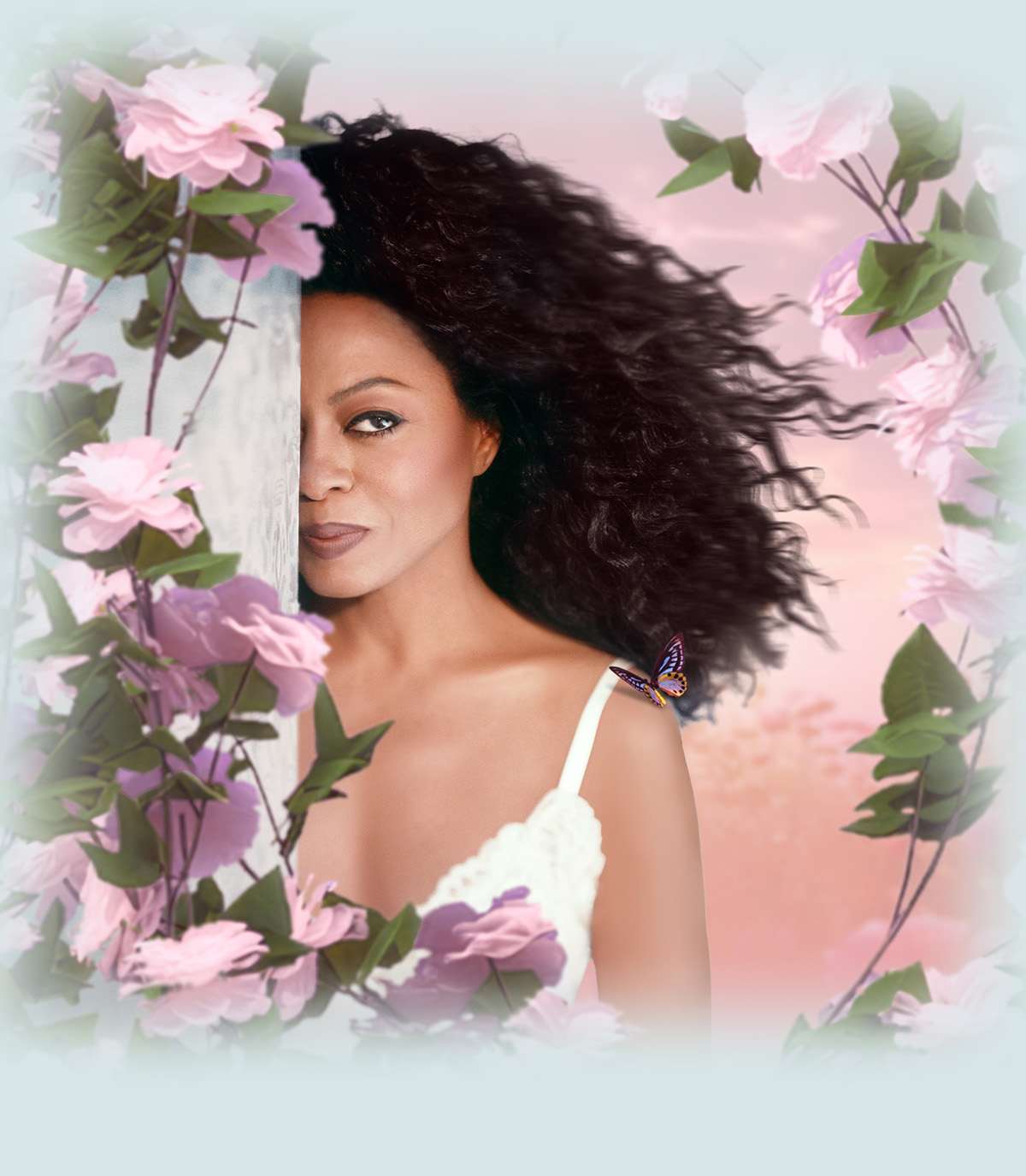
Diana Ross returns to Wynn Las Vegas for three concerts.
9 months ago by Michael Shulman
Diana Ross returns to Wynn Las Vegas for three concerts.
In the world of entertainment, there are many singers. Some of the more incandescent of these become stars, and some of these stars go on to achieve global headliner status. But no matter how many stellar singing careers have been launched and gone supernova over the decades, none has reigned longer and more luminously than the one and only Diana Ross, who—a half-century after being named “Female Entertainer of the Century” by Billboard, back in 1976—continues to do so most glamorously in her signature Bob Mackie looks of beads and sequins on nude illusion.
To this day, Ross remains the only artist to have had singles go to number-one as a solo artist (eight times), as half of a duo (“Endless Love” with Lionel Richie), as part of a trio (12 times with the Supremes), and as part of an ensemble (“We Are the World” with USA for Africa), not to mention via sampling (Ross’ 1980 single, “I’m Coming Out,” was sampled in the Notorious B.I.G.’s 1997 number-one hit “Mo Money Mo Problems”).
She’s sold more than 100 million albums worldwide; alongside Mary Wilson and Florence Ballard, was inducted into the Rock and Roll Hall of Fame as part of the founding lineup of the Supremes (1988); received the Kennedy Center Honors during the presidency of George W. Bush, alongside Leon Fleischer, Steve Martin, Martin Scorsese, and Brian Wilson (2007); has been honored with two Grammy Lifetime Achievement Awards (the first in 2012 as a solo artist, and the second in 2023, alongside Mary Wilson and Florence Ballard, as part of the Supremes); received the Presidential Medal of Freedom from President Barack Obama (2016); and was recognized with the American Music Awards’ Lifetime Achievement Award (2017).
Now, the luminous Miss Ross is returning to the Encore Theater at Wynn Las Vegas—the elegantly intimate venue she’s called ‘home’ since 2017, in which she’s staged her limited-run Las Vegas residencies, Endless Memories (2017-18), Music and Love (2018), Diamond Diana (2019), and An Extraordinary Evening (2020), in addition to a run of her Thank You Tour (2022)—with a three-night engagement as part of her Diana in Motion: 2026 US Tour, on February 12, 14, and 15.
As a Las Vegas headliner, Ross has endeared herself to her audience on numerous occasions. Still, two in particular have had a lasting influence on how artists performing on the Strip interact with their audiences. The first happened during her The Essential Diana Ross: Some Memories Never Fade residency at The Venetian Resort Las Vegas (2015-2017). During one performance, Ross noticed that Security had approached two older ladies who had been dancing in front of their seats and were making them sit down. Ross told her band to stop playing, then addressed the Security team and the audience, explaining that if anyone who had spent their good money on tickets to see her wanted to get up and dance, they should be allowed to do so. And while she hoped this didn’t infringe on the good time being had by any of her other guests, if anyone was truly bothered by this, they were welcome to leave. The result of this action—which Ross has repeated a few times in the decade since, most recently while singing “I Will Survive” at the Royal Albert Hall in 2025—can be seen in the signage at venues like The Colosseum at Caesars Palace, where during Jennifer Lopez’s recent residency show, signs had been placed throughout the venue proclaiming that, “Guests at this performance are encouraged to dance and have fun!”
The other happened when Ross first played the Encore Theater in 2017. Because of the steep incline in the Encore Theater, Ross was delighted to notice that she could actually see everyone's faces. So, from the stage on opening night, she asked for the House lights to be turned up so she could see the smiling faces of her fans as they sang along (and danced). She has continued this practice at every performance in the Encore Theater.
Amidst all of this love going back and forth between Ross and her audience, the only downside is that, due to the sheer number of hits Ross has had—with the Supremes in the Motown era, as a solo artist in the disco era, and throughout her film career—there’s just no way for her to perform all or even most of them in the time allotted. I’ve seen Ross more than twenty times since the ‘90s, and every time I go in with my fingers crossed, hoping that’ll be the night she decides to go off-script and sing “No One Gets the Prize,” but it hasn’t yet come to pass. So, if you’re holding out hope of hearing a deep cut, a B-side, or one of her more obscure ballads, don’t get crushed if she doesn’t sing it. Just be secure in the knowledge that—assuming you grew up with radio and television—most (if not all) of the songs Ross sings will be familiar to you, will put a smile on your face, and will invariably have you dancing in front of your seat.
Some of the hit songs you are likely to hear when Diana Ross brings her Diana in Motion: 2026 US Tour to the Encore Theater at Wynn Las Vegas on February 12, 14, and 15, include the following (arranged chronologically by the date recorded by Ross):
“You Can’t Hurry Love” — This 1966 hit, written and produced by Motown’s in-house hitmakers Holland-Dozier-Holland, became the Supremes’ seventh No. 1 single and was so popular the group even recorded and released an Italian version, “L’amore verrà” (“Love Will Come”). The song was notably covered in 1982 by Phil Collins (whose version inspired the bassline of “This Charming Man” by the Smiths), in 1999 by the Chicks for the soundtrack to Runaway Bride, in 2015 — a cappella — by the Bellas in Pitch Perfect 2, and in 2018 by Cynthia Erivo in Bad Times at the El Royale. It was also memorably lip-synced by Whoopi Goldberg in Jumpin’ Jack Flash (1988).
“Love Child” — Diana Ross & the Supremes finally knocked the Beatles’ “Hey Jude” from the top of the charts — where the British band had remained for nine weeks — with this 1968 hit, their 11th No. 1 single. The Supremes’ third-biggest-selling single, “Love Child,” sold 500,000 copies in its first week and 2 million by year’s end, spending 11 weeks in the top 10. With themes of illegitimacy and poverty, the group’s first foray into psychedelic soul opened the door for other Motown artists to explore socially conscious material, including Edwin Starr’s “War,” the Temptations’ “Cloud Nine,” and Marvin Gaye’s “What’s Going On.”
The song later appeared in the film Phenomenon (1996), the television series The Wire (2003), and RuPaul’s Drag Race Season 17 (2025), where it underscored a lip-sync between Sam Star and Suzie Toot in front of guest judge Tracee Ellis Ross.
“Ain’t No Mountain High Enough” — Songwriting duo Ashford & Simpson penned this hit for Marvin Gaye and Tammi Terrell in 1967; Ross’ 1970 version became her first No. 1 single as a solo artist and earned a Grammy nomination for best female contemporary vocal performance. Arguably her signature song, it has appeared in films including Sister Act 2: Back in the Habit (1993), Stepmom (1998), Remember the Titans (2000), Bridget Jones’s Diary (2001) and Chicken Little (2005), as well as television series such as The Wonder Years, Nip/Tuck, Grey’s Anatomy, Pose and The Big Leap, in addition to numerous reality competition performances.
“Theme from Mahogany (Do You Know Where You’re Going To)” — Written by Michael Masser and Gerry Goffin and first recorded in 1973 by Thelma Houston, the song was reintroduced by Ross in 1975 for the soundtrack to her film Mahogany. Her version reached No. 1 on the Billboard Hot 100 and earned an Academy Award nomination for best original song. It later appeared in television series, including Everybody Hates Chris, Scandal, and Pretty Little Liars.
“The Boss” — Written and produced by Ashford & Simpson for Ross’ 1979 album The Boss, this dance-floor classic reached No. 1 on the Hot Dance Club Play chart. Its message of female autonomy and self-determination mirrored Ross’ evolving artistic control and enduring cultural power. The song later appeared in films including 54 (1998) and Noah’s Arc: The Movie (2025), and in a notable RuPaul’s Drag Race All Stars lip-sync in 2018.
“It’s My House” — another Ashford & Simpson composition from 1979’s The Boss — celebrates independence, confidence, and self-worth. Though it did not chart on release, it has since become a fan favorite and staple of Ross’ live shows. It has appeared in 80 for Brady (2023) and in television series, including Big Little Lies, Pose, Dave, The Proud Family: Louder and Prouder, and Dead Ringers, and has been sampled by artists such as Snoop Dogg and Lady Gaga.
“Upside Down” — The 1980 album Diana, written and produced by Chic’s Nile Rodgers and Bernard Edwards, became Ross’ best-selling release and achieved platinum status. Its lead single, “Upside Down,” topped the Billboard Hot 100, Hot Dance/Disco Club Play, and Hot Soul Singles charts, earned a Grammy nomination for best female R&B vocal performance, and won the favorite soul/R&B single award at the American Music Awards. The track has been widely covered, sampled, and featured across film and television, underscoring its enduring pop influence.
“I’m Coming Out” — Inspired by Ross impersonators at a New York drag club, Nile Rodgers envisioned the 1980 anthem as a declaration of pride and empowerment. The song topped the Hot Dance/Disco Club Play chart and became one of the most celebrated LGBTQ anthems in popular music history — as well as a frequent Ross show opener. It has appeared in films including The Last Days of Disco, Maid in Manhattan, Trolls, Poms, Borat Subsequent Moviefilm, and Luther: The Fallen Sun, as well as numerous television series and reality competitions. It was famously sampled in the Notorious B.I.G.’s 1997 No. 1 hit “Mo Money Mo Problems” and later by Ariana Grande.

