
over 4 years ago by Wynn Staff
over 4 years ago by Wynn Staff
Peppery, floral, citrusy, and earthy: Some of the most nuanced flavors across Wynn restaurants come straight from the flower garden.
By Andrea Bennett for Wynn Magazine | Photography by Sabin Orr
Peppery, floral, citrusy, and earthy: Some of the most nuanced flavors across Wynn restaurants come straight from the flower garden.
At Mizumi, edible flowers are treated with the same precision as any other ingredient. Since the flavors of even the same flower varieties shift from season to season, blossoms are carefully selected to complement each dish. Spring and summer flowers tend to be softer, sweeter, and more floral, while winter blooms develop more intense and bitter notes, influencing how dishes are balanced throughout the year. Peppery nasturtium, for example, offsets the richness of pork belly during colder months.
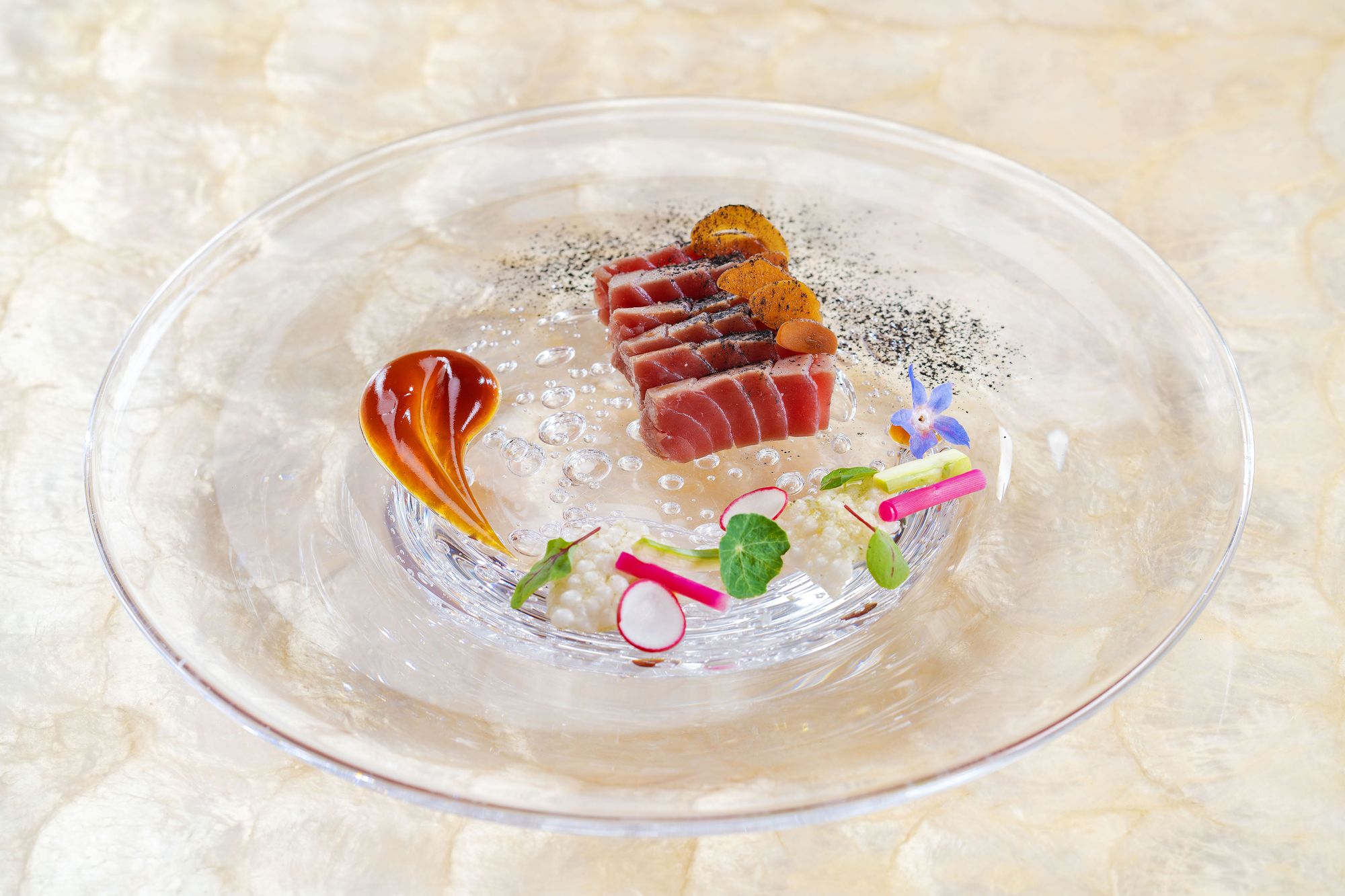
The artful cuisine of Chef Min Kim blooming with edible color.
Mizumi’s madai snapper sashimi usuzukuri with white soy and lime dressing evolves with the seasons as well. In summer, delicate acacia flowers add subtle honeyed notes, while winter preparations incorporate more assertive blossoms and microgreens. The visual effect is striking, but flavor remains the guiding principle. The flowers contribute vibrancy and texture while still serving as an essential culinary component rather than mere decoration.
At SW Steakhouse, Executive Pastry Chef Michael Outlaw incorporates edible flowers not only for visual contrast but also to balance richness, brightness, and texture across seasonal desserts. Marigolds introduce citrus notes and pungency, while violas soften dishes with a delicate floral character.
The flowers, appearing in shades of maroon, gold, yellow, and violet, also enhance the visual presentation, making citrus, cream, and fruit elements feel even more vivid on the plate.
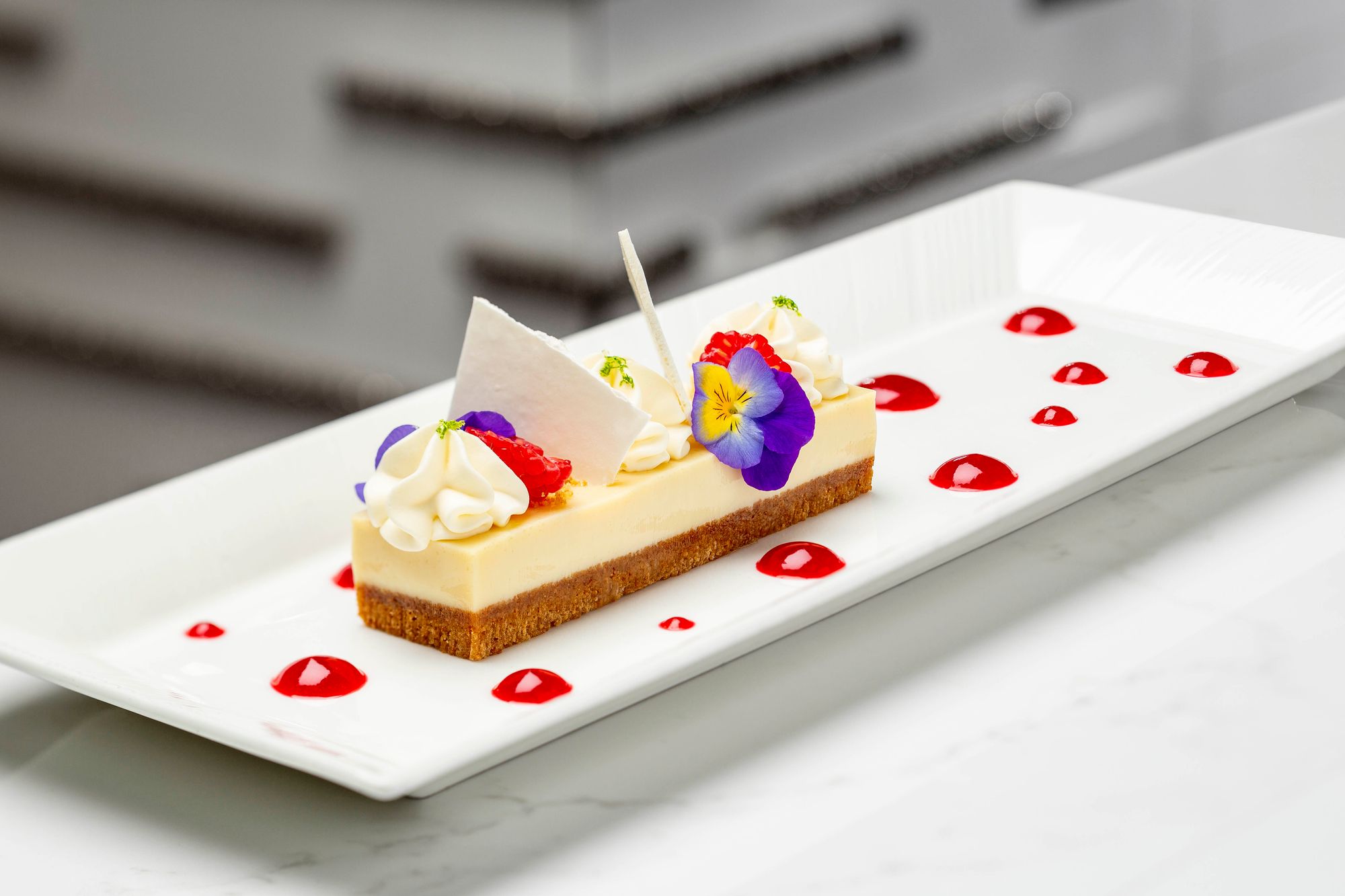
Decadent and delicious, this Key lime pie's bright flavor is perfectly paired with the vibrant floral notes of its adornments.
Though flower petals on a plate may feel contemporary, their culinary use stretches back centuries. Romans famously dined on roses and violets, while marigolds played a role in rituals throughout Incan and Aztec cultures.
Medieval monks used calendula as a “poor man’s saffron” to brighten soups and stews during winter months, and violas became prized confections in Victorian-era desserts.
At Wing Lei, flowers are valued not only for flavor but also for their long-standing role in traditional cooking and wellness practices. Chrysanthemum is associated with helping to reduce fever and blood pressure, lavender is linked to relaxation, and nasturtium has historically been associated with respiratory support.
Memory and nostalgia also shape many floral dishes. An Alaskan king crab salad at Wing Lei draws inspiration from chrysanthemum hairy crab dishes enjoyed during childhood in China. Yuzu and white miso provide tang and depth, while chrysanthemum introduces subtle floral notes reminiscent of chamomile.
At Wynn Las Vegas, floral ingredients are designed to engage every sense. Aroma, color, texture, and flavor work together to create dishes that feel immersive long before the first bite.
That philosophy carries through to desserts as well. One spring dessert with layers of vanilla panna cotta, strawberry meringue, and strawberry rosé sorbet, featuring star-shaped Egyptian flowers that add citrus and floral brightness. The result is creamy, palate-cleansing, and visually radiant all at once.
At Wynn restaurants, edible flowers do more than decorate the plate. They deepen flavor, evoke memory, and transform dining into a fully sensory experience.

